
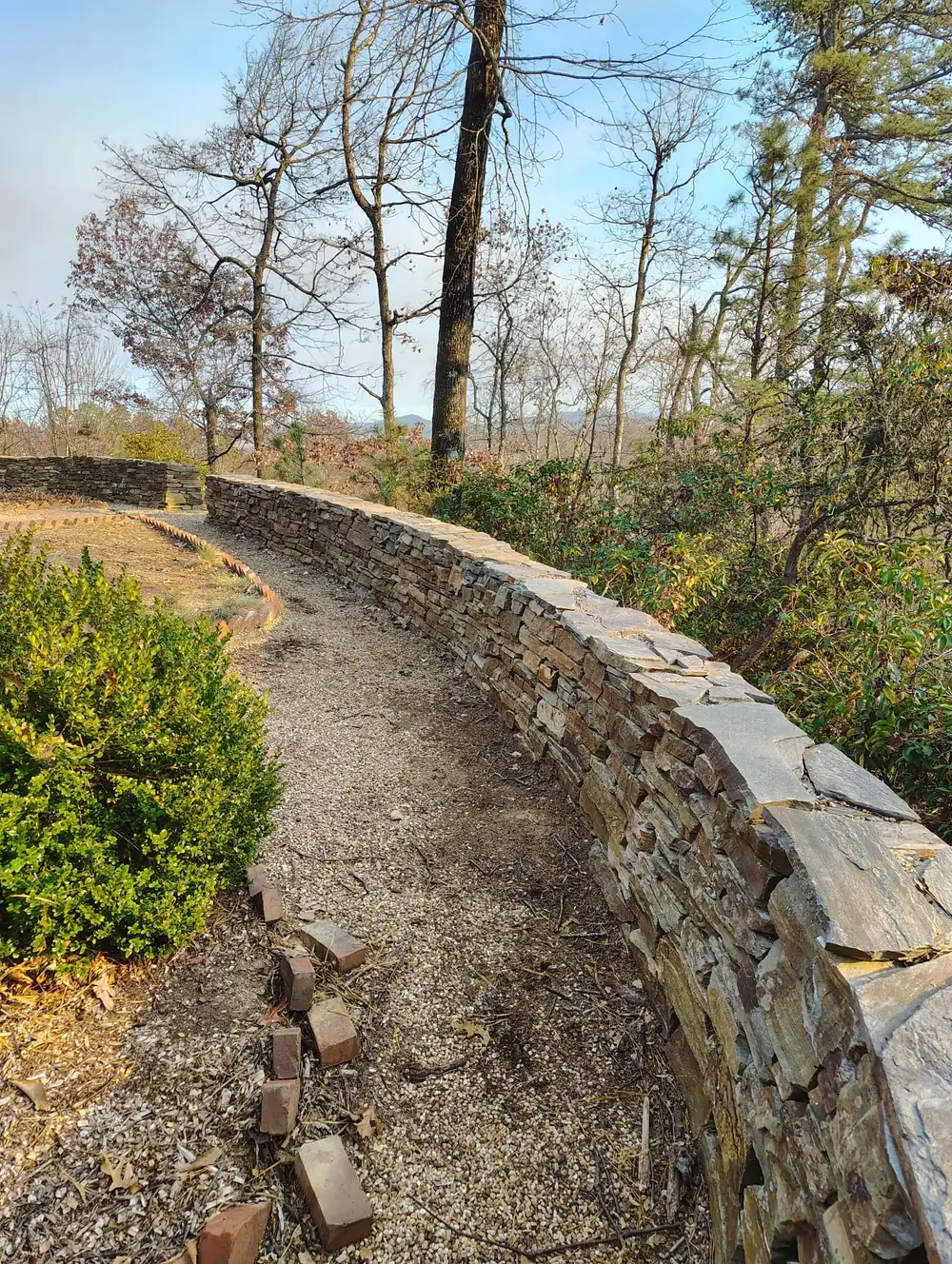
Retaining Walls & Stonework in Asheville, NC
Stone retaining walls, borders and paths built to hold up on the slopes and terrain around Western North Carolina.
Built for Asheville's hills
Between the slopes and heavy rain in Western North Carolina, a well-built retaining wall stops erosion and makes a yard usable instead of just a hillside.
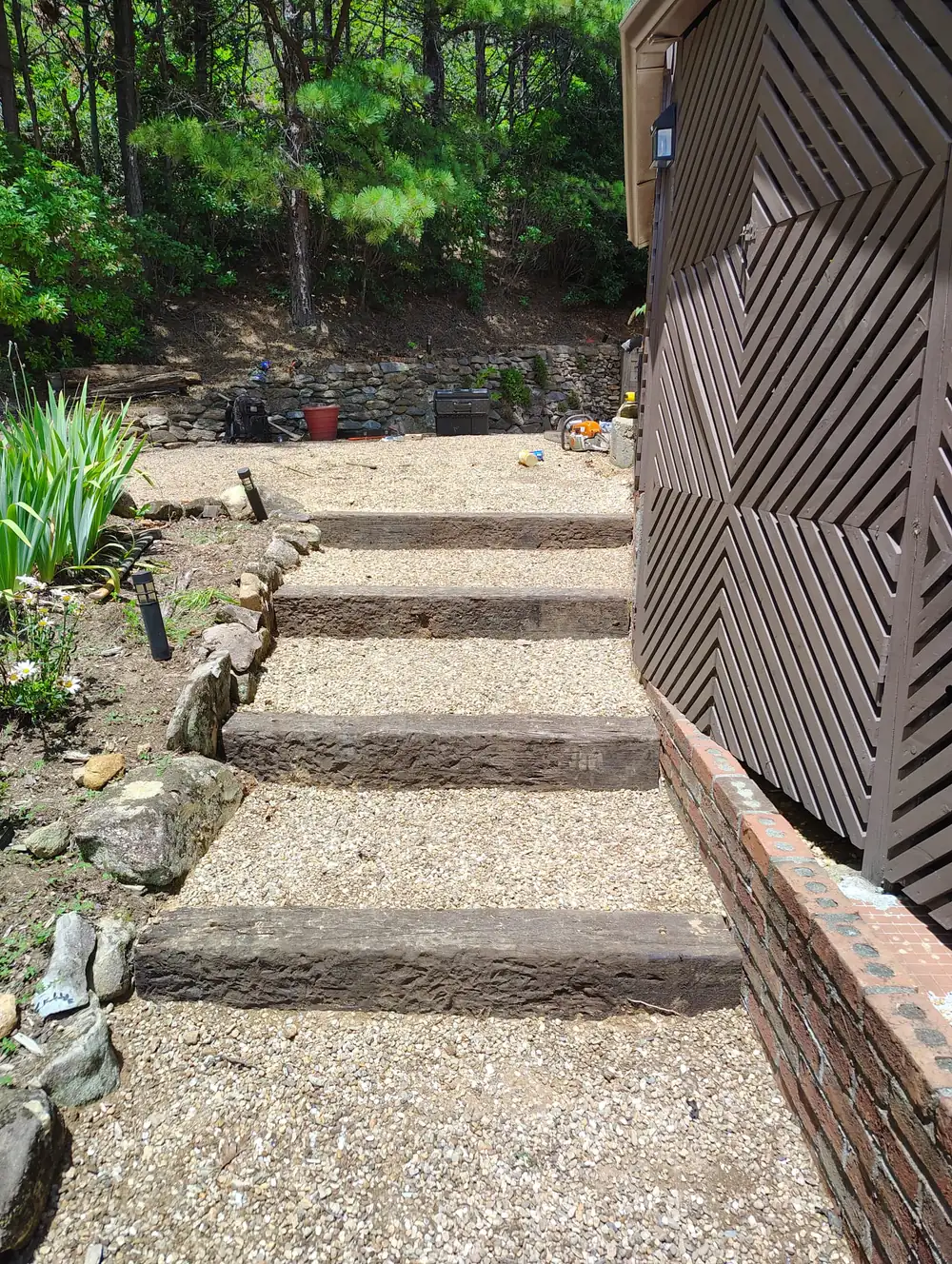
Recent stonework
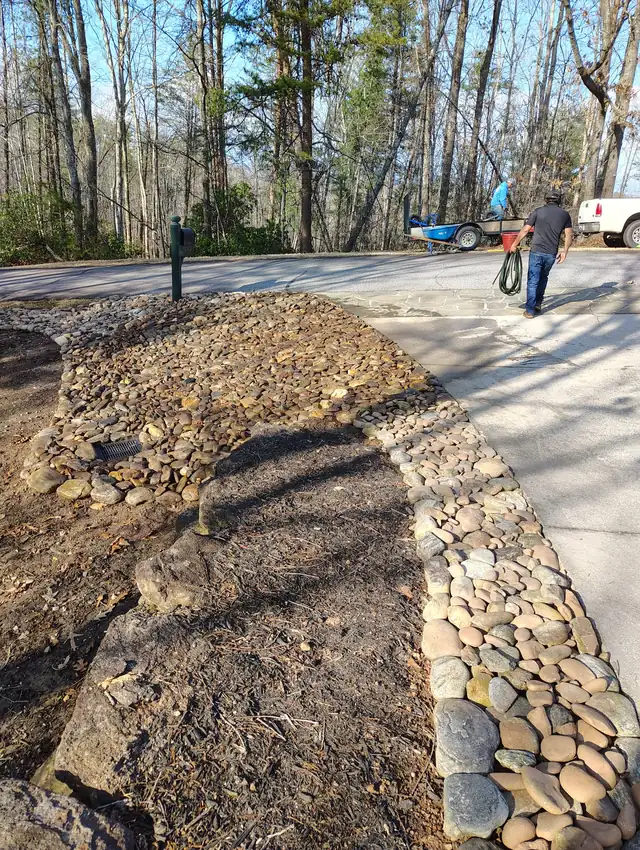
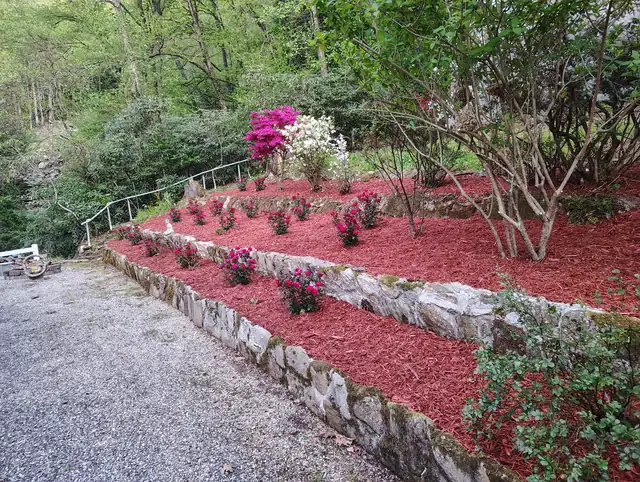
What actually makes a wall last
Retaining walls fail here for one reason far more than any other: water. Western North Carolina gets heavy rain in short bursts, and a wall built without a way to release the water building up behind it is holding hydrostatic pressure it was never designed to take. That is what causes the bulging and leaning you see on older walls all over the area.
So the parts that matter most are the parts you cannot see once the job is done. A compacted base below grade, clean gravel backfill behind the face, and a drain line at the bottom that carries water somewhere sensible. Those three things are the difference between a wall that stands for decades and one that starts moving in three winters.
Height matters legally as well as structurally. In North Carolina, walls above roughly four feet generally need engineering and permitting, and that is a line we will tell you about honestly rather than quietly building something taller than it should be. Often the better answer on a tall grade is two shorter terraced walls instead of one big one.
How a wall gets built
Most of the work happens before the first visible stone goes down.
Read the grade
We look at where water runs in a storm, since that dictates where the wall and drainage go.
Excavate and compact
A trench below grade, compacted, so the wall is sitting on something that will not settle.
Build and backfill
Stone or block set course by course with gravel backfill and a drain line behind it.
Finish the grade
Soil restored, area graded to drain away, and the site cleaned up before we leave.
What affects the price
Stonework is priced by the job because the underground work varies so much site to site:
We will tell you honestly if your slope does not need a wall at all. Sometimes regrading or a dry creek bed solves the problem for a fraction of the cost.
Retaining walls & stonework FAQ
Do I need a retaining wall on a sloped yard?+
If you're seeing soil erosion, a slope that's hard to mow or use, or water pooling near your foundation, a retaining wall is usually the fix. We can assess your property and tell you honestly if it's needed.
What kind of stone do you use?+
We work with natural stone and manufactured retaining wall block depending on the look and budget you want.
Do you also build stone paths and borders?+
Yes, stonework covers retaining walls as well as garden borders and walkways.
How tall can a retaining wall be?+
In North Carolina, walls above roughly four feet generally require engineering and a permit. We build within that limit as standard, and on taller grades we usually recommend two terraced walls rather than one tall one. Terracing is often better looking, drains more predictably and avoids the engineering cost.
Do you install drainage behind the wall?+
Always. Clean gravel backfill and a perforated drain line at the base are standard on every wall we build, not an upgrade. Water pressure behind a wall is the number one reason walls fail in this climate, and a wall built without drainage is a wall with a countdown on it.
Natural stone or manufactured block, which should I pick?+
Natural stone looks at home on mountain properties and ages beautifully, but it costs more and takes longer to set because each piece has to be fitted. Manufactured block is faster, more uniform and easier on the budget, and it works well for clean modern lines. We will price both if you want to compare.
Related services
Most properties need more than one of these. We can bundle them into a single visit and a single estimate.
Have a slope that needs a wall?
Free estimate, no obligation. We usually reply within 24 hours.