Mulch & Pine Straw Installation in Asheville, NC
Fresh mulch or pine straw around trees and beds to hold moisture, keep weeds down, and finish your yard's look.
Beds that look clean and protect your plants
Mulch and pine straw aren't just decoration. They hold moisture in dry spells, keep weeds from taking over, and give garden beds a finished look.
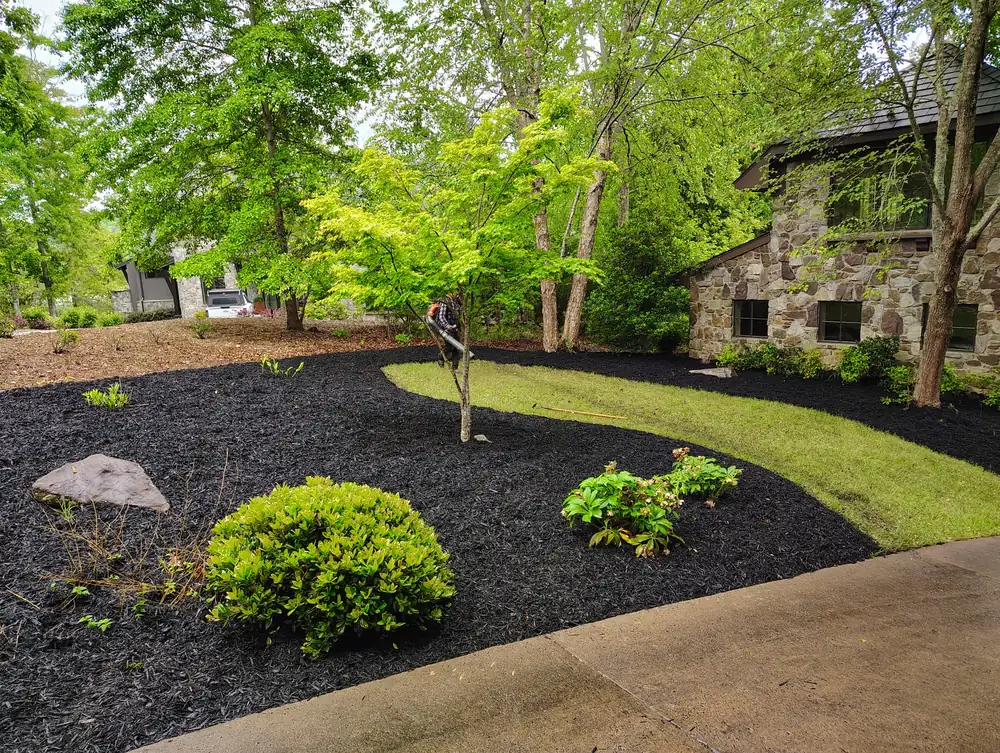
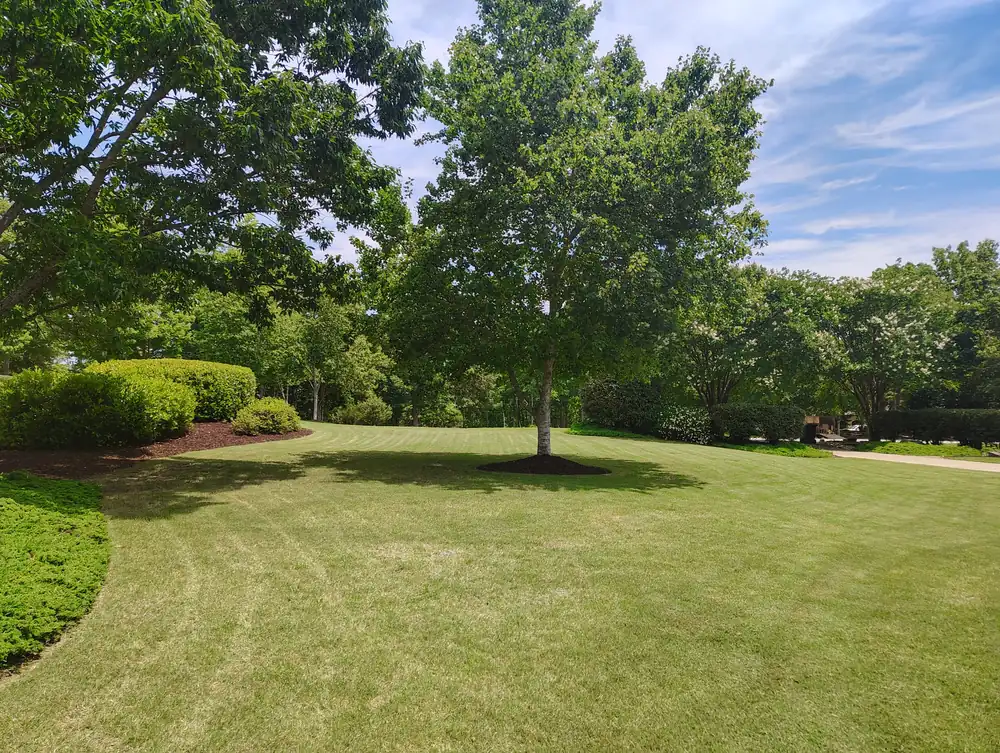
Mulch jobs around Asheville
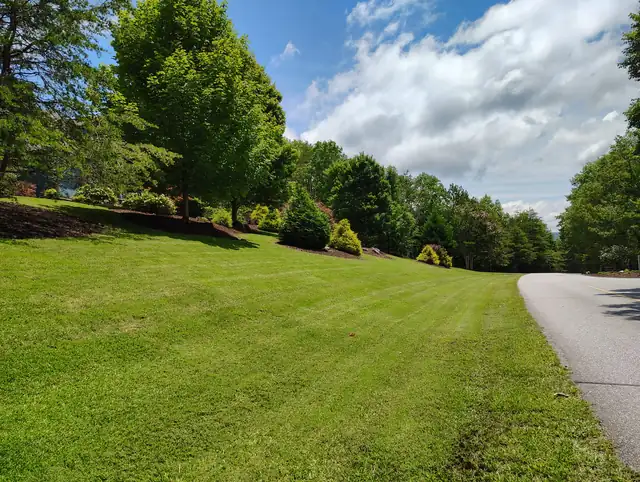
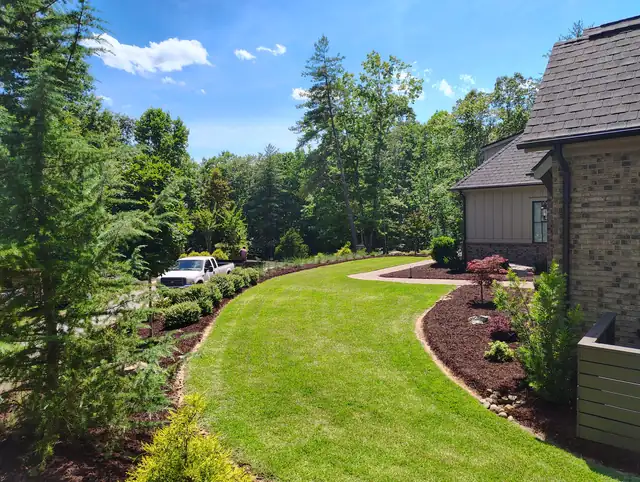
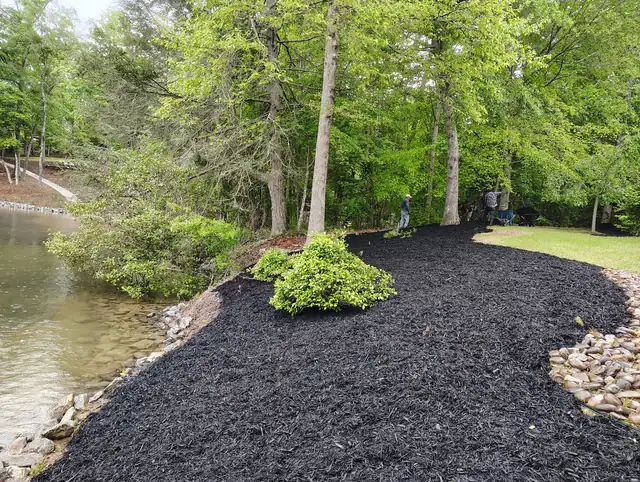
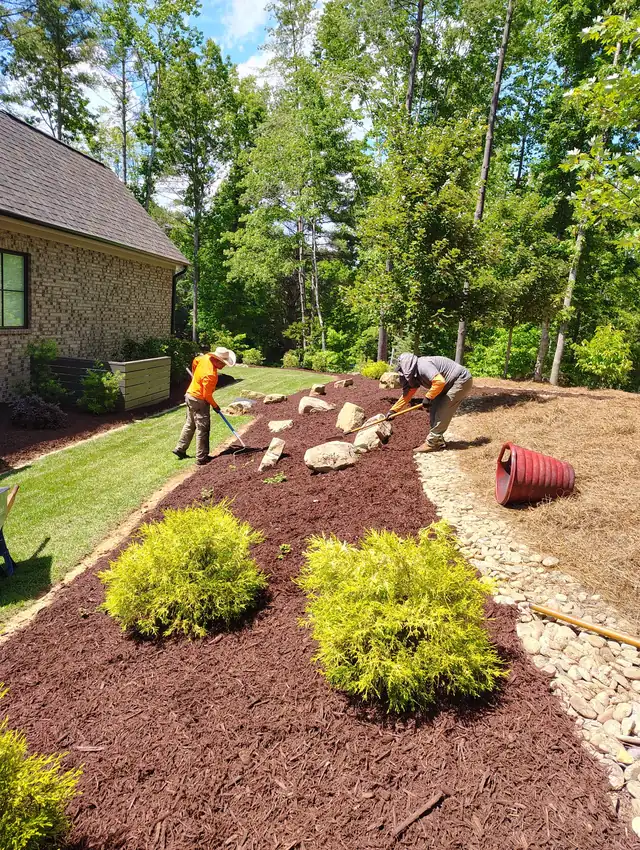
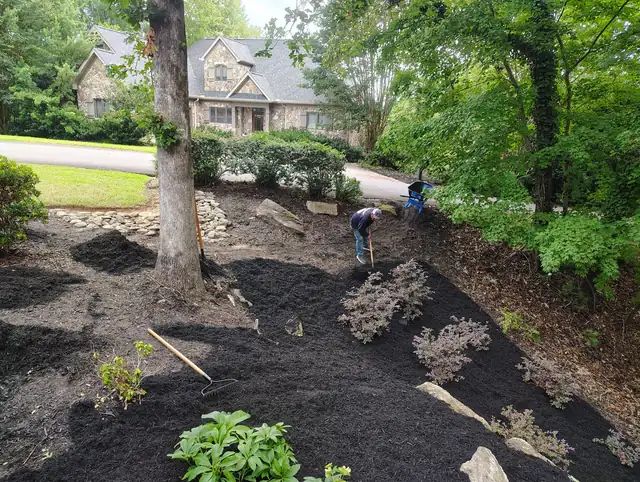
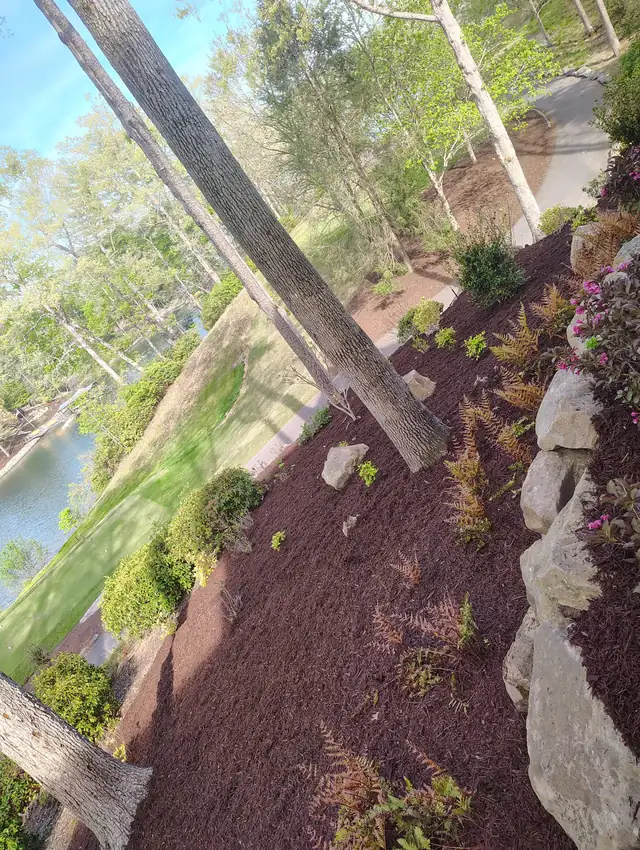
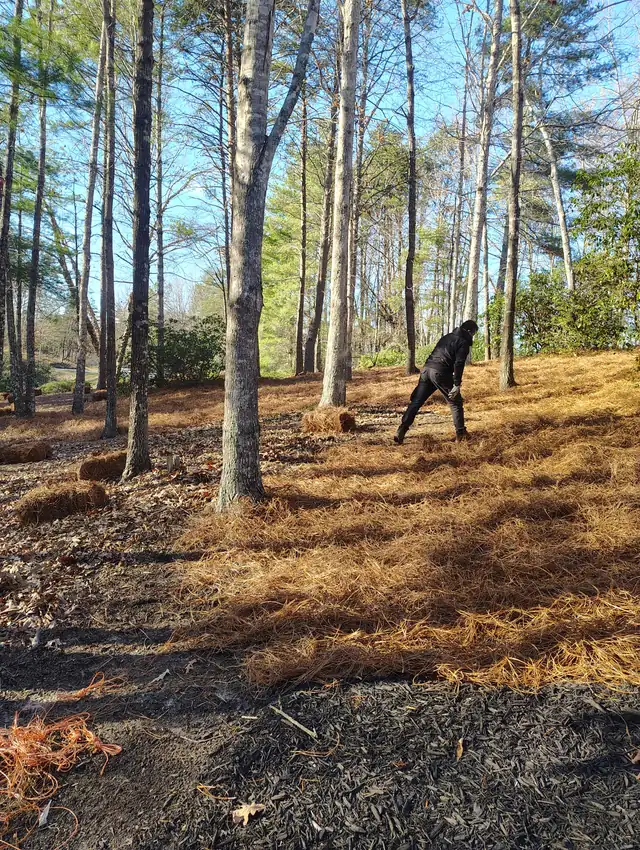
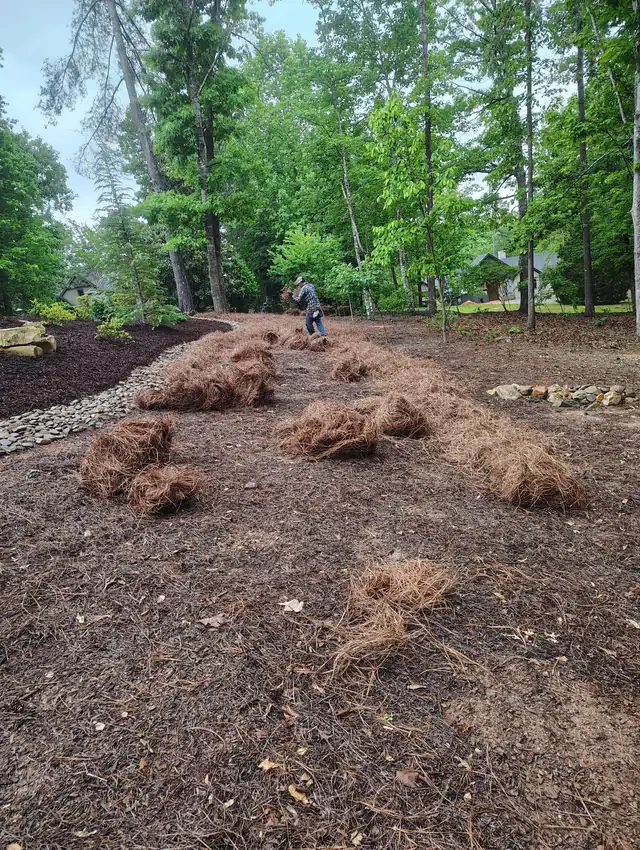
Mulch does real work on clay and slopes
On the red clay most Asheville properties sit on, mulch is doing more than making beds look finished. A two to three inch layer keeps summer soil temperature down, holds moisture through the dry stretch in late July, and slowly adds the organic matter that our compacted clay is short on.
It also matters for erosion, which is a real issue on WNC hillsides. Bare bed soil on a slope moves every time we get a heavy afternoon storm, and it takes your amendments and fertilizer with it. Shredded hardwood mulch knits together and stays put on grade far better than bark nuggets, which float and end up at the bottom of the slope.
Pine straw is the other option and it is popular here for good reason. It is lighter, it holds on steep ground even better than shredded mulch, it looks right under pines and rhododendron, and it slightly acidifies the soil as it breaks down, which suits the acid loving plants that grow well in these mountains.
How installation runs
Prep is most of the job. The mulch itself is the fast part.
Weed and clean out
Beds are weeded and old matted material is pulled back so we are not burying a problem.
Re-cut the edge
A clean spade edge along the bed line, which is what makes a mulch job look sharp from the street.
Lay to depth
Two to three inches, kept pulled back off trunks and stems rather than piled against them.
Blow down
Walks, drives and lawn edges blown clean so no mulch is left tracked across hard surfaces.
What affects the price
Mulch is quoted by the volume it takes plus the prep the beds need. Both matter:
We measure the beds and give you the yardage in writing so you can see exactly what you are paying for.
Mulch & pine straw FAQ
Mulch or pine straw, which should I choose?+
Mulch tends to break down slower and suits most garden beds. Pine straw is lighter, common on slopes, and blends well under trees. We'll recommend one based on your beds when we give the estimate.
How often does mulch need to be refreshed?+
Most beds look best with a fresh layer once a year, though it depends on the mulch type and sun exposure.
Do you remove the old mulch first?+
We clear out excess old material and weeds before laying fresh mulch or pine straw so it looks clean and lasts longer.
How deep should mulch be?+
Two to three inches for most beds. Less than that will not suppress weeds or hold moisture, and more than three inches starts holding too much water against roots and can keep rain from reaching the soil at all. We also keep it pulled back off trunks rather than mounded against them, since piling mulch on bark holds moisture there and invites rot.
When is the best time to mulch in Asheville?+
Spring is most common, once the soil has warmed up, usually April into May. Mulching too early in a cold spring insulates the ground and slows everything down. Fall works too and gives beds some winter protection, and it is a good option if you want the property looking finished heading into the slow season.
Should I choose mulch or pine straw?+
Mulch breaks down more slowly and works well in most flat and gently sloped beds. Pine straw is lighter, holds better on steep ground, looks natural under pines and rhododendron, and slightly acidifies the soil as it breaks down. We recommend based on your beds and slope when we give you the estimate.
Related services
Most properties need more than one of these. We can bundle them into a single visit and a single estimate.
Give your beds a fresh look
Free estimate, no obligation. We usually reply within 24 hours.